

Leaf Removal and Winter Lawn Care Explained
November 16, 2026
Share
What Winter Lawn Care and Leaf Removal Involve
Winter lawn care in Dublin mainly means clearing fallen leaves regularly, mowing less often but not stopping completely, and improving drainage so grass does not sit under soggy leaf cover. Done consistently from November through February, this keeps lawns healthy, prevents moss and bare patches, and sets gardens up for strong growth in spring.
In this guide we cover why leaves need to come off lawns quickly, how to judge the last mow of the season, dealing with moss and waterlogging, tidying patios and beds, and the small jobs that make the biggest difference to a garden by spring. If you would rather hand the whole job over, our gardening and winter garden service covers gardens across the city and the surrounding areas, and every job starts with a free consultation and quote.
Why Fallen Leaves Need to Come Off the Lawn Quickly
A thick layer of wet leaves blocks light and traps moisture against the grass underneath. Left for more than a week or two, especially during a wet spell, this can yellow or kill patches of lawn and encourage the kind of fungal problems that are much harder to fix than to prevent in the first place.
Leaves from sycamore, horse chestnut and lime trees are some of the worst offenders, since they fall in large, heavy amounts and mat down quickly once rained on. Smaller leaves from birch or rowan break down faster and cause less harm if a few are missed during a clearance.
Leaf cover is also one of the conditions that lets lawn diseases such as red thread and fusarium patch take hold, since both spread faster in grass that stays damp and shaded for long stretches. Keeping the surface clear and letting air and light reach the grass is a simple, low-cost way to avoid dealing with these problems later.
- Clear leaves off the lawn at least once a week while nearby trees are shedding heavily.
- Rake or blow leaves away rather than leaving them to sit and decompose on the grass.
- Add healthy leaves to a compost heap or a leaf mould bin instead of the general waste.
- Keep an eye on leaves gathering against fences, sheds and drains as well as the lawn itself.
Knowing the Last Mow of the Season
Knowing when to stop is one of the most common winter lawn care questions we hear from homeowners. Grass growth slows down once soil temperatures drop, but in a typical Dublin winter it rarely stops completely. Rather than putting the mower away in October, it usually makes more sense to keep mowing occasionally, on a high setting, whenever the grass is dry enough and still growing.
A Simple Mowing Checklist for Late Autumn
- Raise the mower blades so you are only taking the top of the growth off, never scalping the lawn.
- Only mow when the grass and ground are dry, not straight after heavy rain or a frost.
- Remove leaves from the lawn before mowing so they are not pressed into the soil.
- Stop mowing for the winter once growth clearly slows and the ground stays wet for long periods.
Mowing a wet or frosted lawn compacts the soil and damages the grass crown, so it is worth waiting for a dry afternoon rather than sticking to a fixed weekly schedule once winter properly sets in.
Dealing with Moss and Waterlogging on Wet Lawns
Winter is Ireland's wettest season, and Met Éireann's official climate averages put winter rainfall at around 380mm, more than any other season of the year. That rainfall, combined with low light and heavy clay soil in many Dublin gardens, is exactly the kind of condition moss thrives in.
Moss spreads fastest on lawns that are compacted, shaded or sitting in standing water for long periods. A spiked lawn aerator used carefully on a dry day can improve drainage in smaller areas, while larger or persistently waterlogged lawns usually need proper aeration and drainage work to solve the problem for good.
- Soft, spongy ground that stays wet long after the rain has stopped
- Green or black moss patches spreading across bare or thin grass
- Puddles forming in the same spots after every heavy shower
- Grass that looks pale or tired even when it is not being over-mowed
If a lawn shows several of these signs every winter, it is often more cost-effective to have a garden landscaper look at the drainage and soil condition than to keep treating moss on the surface year after year.
Autumn Garden Clean Up Around Patios and Decking
Leaves are not only a lawn problem. Wet leaves left on patios, decking or paths become slippery underfoot and can stain stone or timber if they are not swept off regularly through autumn and winter. Gutters and drains near the house are worth checking too, since leaf litter is one of the most common causes of blocked downpipes at this time of year.
If you are planning any patio paving or decking work for next year, late autumn and winter is also a sensible time to get it priced and scheduled, since it tends to be quieter than spring and summer for most landscaping companies.
We recently covered how to take on a garden that has been left to grow wild over the warmer months in our article on clearing an overgrown garden before landscaping, which pairs well with a winter clean up if beds and borders need attention as well as the lawn.
Getting Gardens Ready for Spring
The jobs you do, or skip, in November and December often decide how a lawn and garden look by March. A garden that has had leaves cleared regularly, an occasional careful mow and some attention to drainage will usually recover and green up far faster once the weather turns.
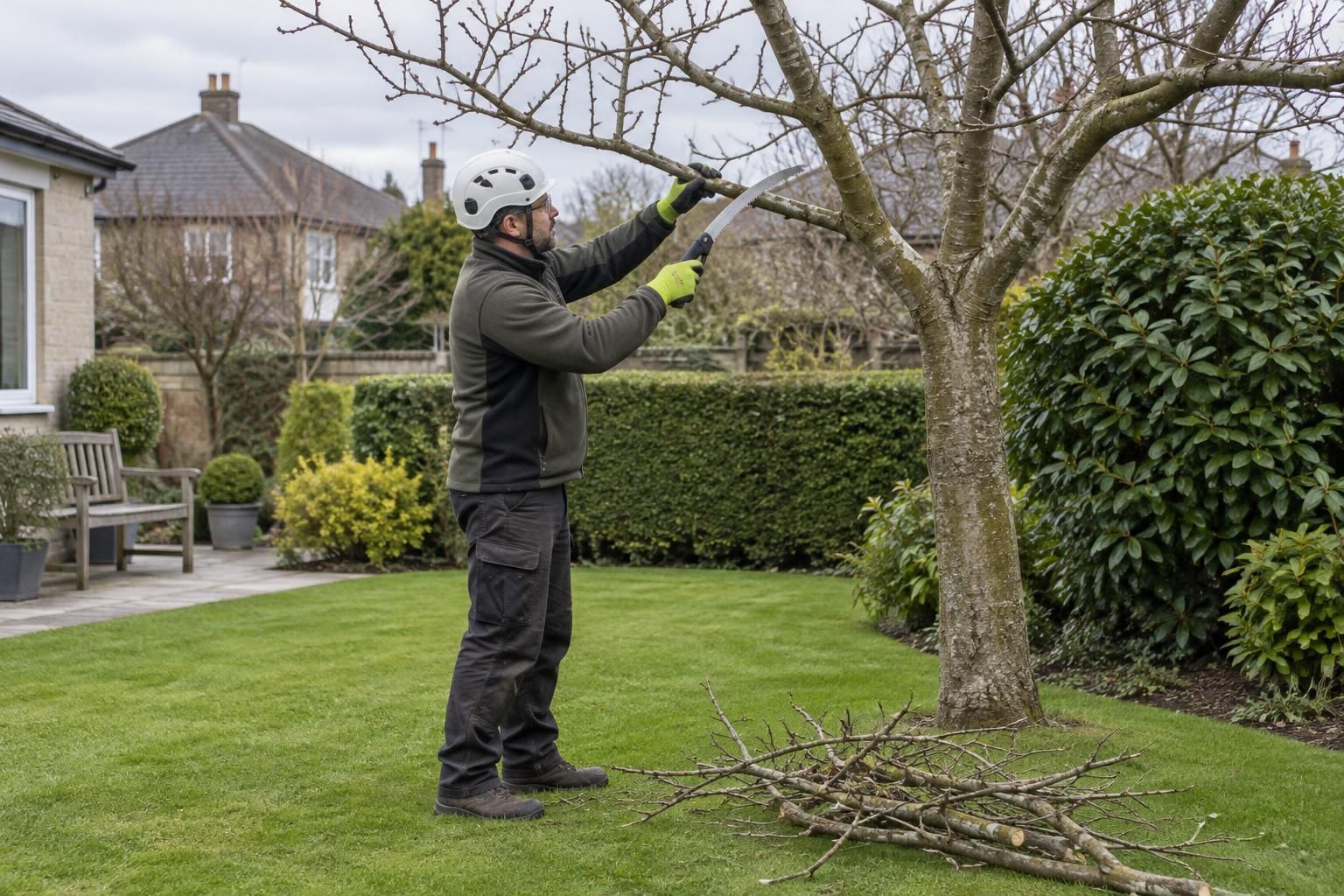
Hedges and trees are also easier to manage once they are bare, which is why winter is a sensible time to deal with overgrown hedging or branches close to the house before new growth starts again in spring. We go into more detail on timing tree work correctly in our guide to winter tree pruning in Dublin.
Lawns that have been neglected over several winters sometimes need more than raking and an occasional mow, such as overseeding bare patches, top dressing or a fuller renovation once spring arrives. Flagging these jobs now, while the garden is quiet, makes it much easier to plan the work for when conditions improve.
If a lawn has really struggled for several winters in a row, some homeowners choose to replace tired, patchy grass with fresh roll-on turf, or move to hard-wearing artificial grass instead of repeating the same battle every year. Either option can take a lot of the guesswork out of winter lawn care for gardens that get heavy use or sit in a particularly shaded, wet corner of the plot.
A little regular effort through the darker months, rather than one big push in spring, is usually what keeps a garden looking its best all year round. Even twenty minutes spent clearing leaves and checking drainage after a windy day can save a lot of work later on, and it is far easier than trying to repair a lawn that has been left under wet leaves for weeks.
Staying on top of winter lawn care and leaf removal is one of the simplest ways to protect a Dublin garden through the wettest months and avoid bigger problems once spring arrives. Whether you need a one-off autumn clean up or an ongoing winter garden service, our team has more than fifteen years of experience looking after gardens across Dublin and the surrounding areas, backed by a 100% satisfaction guarantee.
Get in touch with Dublin Landscaping Services for a free consultation and quote. Call us on 0830083649 or email info@dublinlandscapingservices.ie to book your winter garden visit.
Recent Posts



What Winter Lawn Care and Leaf Removal Involve
Winter lawn care in Dublin mainly means clearing fallen leaves regularly, mowing less often but not stopping completely, and improving drainage so grass does not sit under soggy leaf cover. Done consistently from November through February, this keeps lawns healthy, prevents moss and bare patches, and sets gardens up for strong growth in spring.
In this guide we cover why leaves need to come off lawns quickly, how to judge the last mow of the season, dealing with moss and waterlogging, tidying patios and beds, and the small jobs that make the biggest difference to a garden by spring. If you would rather hand the whole job over, our gardening and winter garden service covers gardens across the city and the surrounding areas, and every job starts with a free consultation and quote.
Why Fallen Leaves Need to Come Off the Lawn Quickly
A thick layer of wet leaves blocks light and traps moisture against the grass underneath. Left for more than a week or two, especially during a wet spell, this can yellow or kill patches of lawn and encourage the kind of fungal problems that are much harder to fix than to prevent in the first place.
Leaves from sycamore, horse chestnut and lime trees are some of the worst offenders, since they fall in large, heavy amounts and mat down quickly once rained on. Smaller leaves from birch or rowan break down faster and cause less harm if a few are missed during a clearance.
Leaf cover is also one of the conditions that lets lawn diseases such as red thread and fusarium patch take hold, since both spread faster in grass that stays damp and shaded for long stretches. Keeping the surface clear and letting air and light reach the grass is a simple, low-cost way to avoid dealing with these problems later.
- Clear leaves off the lawn at least once a week while nearby trees are shedding heavily.
- Rake or blow leaves away rather than leaving them to sit and decompose on the grass.
- Add healthy leaves to a compost heap or a leaf mould bin instead of the general waste.
- Keep an eye on leaves gathering against fences, sheds and drains as well as the lawn itself.
Knowing the Last Mow of the Season
Knowing when to stop is one of the most common winter lawn care questions we hear from homeowners. Grass growth slows down once soil temperatures drop, but in a typical Dublin winter it rarely stops completely. Rather than putting the mower away in October, it usually makes more sense to keep mowing occasionally, on a high setting, whenever the grass is dry enough and still growing.
A Simple Mowing Checklist for Late Autumn
- Raise the mower blades so you are only taking the top of the growth off, never scalping the lawn.
- Only mow when the grass and ground are dry, not straight after heavy rain or a frost.
- Remove leaves from the lawn before mowing so they are not pressed into the soil.
- Stop mowing for the winter once growth clearly slows and the ground stays wet for long periods.
Mowing a wet or frosted lawn compacts the soil and damages the grass crown, so it is worth waiting for a dry afternoon rather than sticking to a fixed weekly schedule once winter properly sets in.
Dealing with Moss and Waterlogging on Wet Lawns
Winter is Ireland's wettest season, and Met Éireann's official climate averages put winter rainfall at around 380mm, more than any other season of the year. That rainfall, combined with low light and heavy clay soil in many Dublin gardens, is exactly the kind of condition moss thrives in.
Moss spreads fastest on lawns that are compacted, shaded or sitting in standing water for long periods. A spiked lawn aerator used carefully on a dry day can improve drainage in smaller areas, while larger or persistently waterlogged lawns usually need proper aeration and drainage work to solve the problem for good.
- Soft, spongy ground that stays wet long after the rain has stopped
- Green or black moss patches spreading across bare or thin grass
- Puddles forming in the same spots after every heavy shower
- Grass that looks pale or tired even when it is not being over-mowed
If a lawn shows several of these signs every winter, it is often more cost-effective to have a garden landscaper look at the drainage and soil condition than to keep treating moss on the surface year after year.
Autumn Garden Clean Up Around Patios and Decking
Leaves are not only a lawn problem. Wet leaves left on patios, decking or paths become slippery underfoot and can stain stone or timber if they are not swept off regularly through autumn and winter. Gutters and drains near the house are worth checking too, since leaf litter is one of the most common causes of blocked downpipes at this time of year.
If you are planning any patio paving or decking work for next year, late autumn and winter is also a sensible time to get it priced and scheduled, since it tends to be quieter than spring and summer for most landscaping companies.
We recently covered how to take on a garden that has been left to grow wild over the warmer months in our article on clearing an overgrown garden before landscaping, which pairs well with a winter clean up if beds and borders need attention as well as the lawn.
Getting Gardens Ready for Spring
The jobs you do, or skip, in November and December often decide how a lawn and garden look by March. A garden that has had leaves cleared regularly, an occasional careful mow and some attention to drainage will usually recover and green up far faster once the weather turns.
Hedges and trees are also easier to manage once they are bare, which is why winter is a sensible time to deal with overgrown hedging or branches close to the house before new growth starts again in spring. We go into more detail on timing tree work correctly in our guide to winter tree pruning in Dublin.
Lawns that have been neglected over several winters sometimes need more than raking and an occasional mow, such as overseeding bare patches, top dressing or a fuller renovation once spring arrives. Flagging these jobs now, while the garden is quiet, makes it much easier to plan the work for when conditions improve.
If a lawn has really struggled for several winters in a row, some homeowners choose to replace tired, patchy grass with fresh roll-on turf, or move to hard-wearing artificial grass instead of repeating the same battle every year. Either option can take a lot of the guesswork out of winter lawn care for gardens that get heavy use or sit in a particularly shaded, wet corner of the plot.
A little regular effort through the darker months, rather than one big push in spring, is usually what keeps a garden looking its best all year round. Even twenty minutes spent clearing leaves and checking drainage after a windy day can save a lot of work later on, and it is far easier than trying to repair a lawn that has been left under wet leaves for weeks.
Staying on top of winter lawn care and leaf removal is one of the simplest ways to protect a Dublin garden through the wettest months and avoid bigger problems once spring arrives. Whether you need a one-off autumn clean up or an ongoing winter garden service, our team has more than fifteen years of experience looking after gardens across Dublin and the surrounding areas, backed by a 100% satisfaction guarantee.
Get in touch with Dublin Landscaping Services for a free consultation and quote. Call us on 0830083649 or email info@dublinlandscapingservices.ie to book your winter garden visit.
